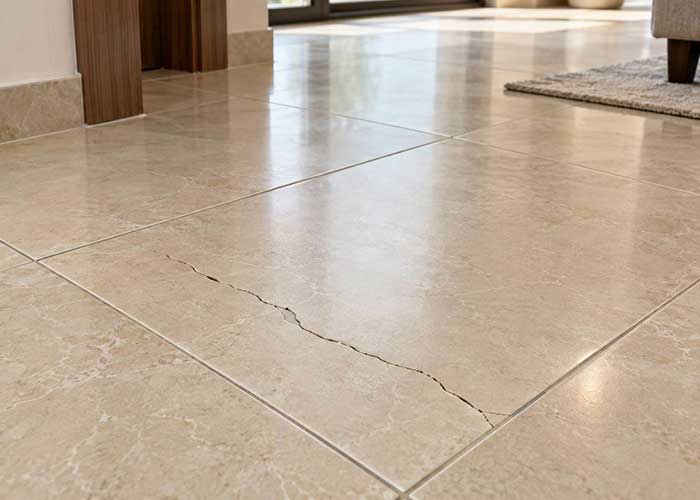
You choose the perfect tiles, the floor looks flawless, and then one morning you spot a thin line running across one of them. It’s frustrating, and the first thought is usually “bad tile.” The truth is more nuanced. In most cases, the tile is just the messenger. Here’s why tiles crack and what you can do to stop it from happening in your home.
Why Do Tiles Crack?
Tiles crack mainly because of weak support, movement, or stress. The most common causes are hollow spots under the tile from poor adhesive coverage, an uneven or uncured base, missing expansion joints, heavy impact, and moisture. Most of these trace back to installation, not the tile itself.
The 6 Most Common Causes
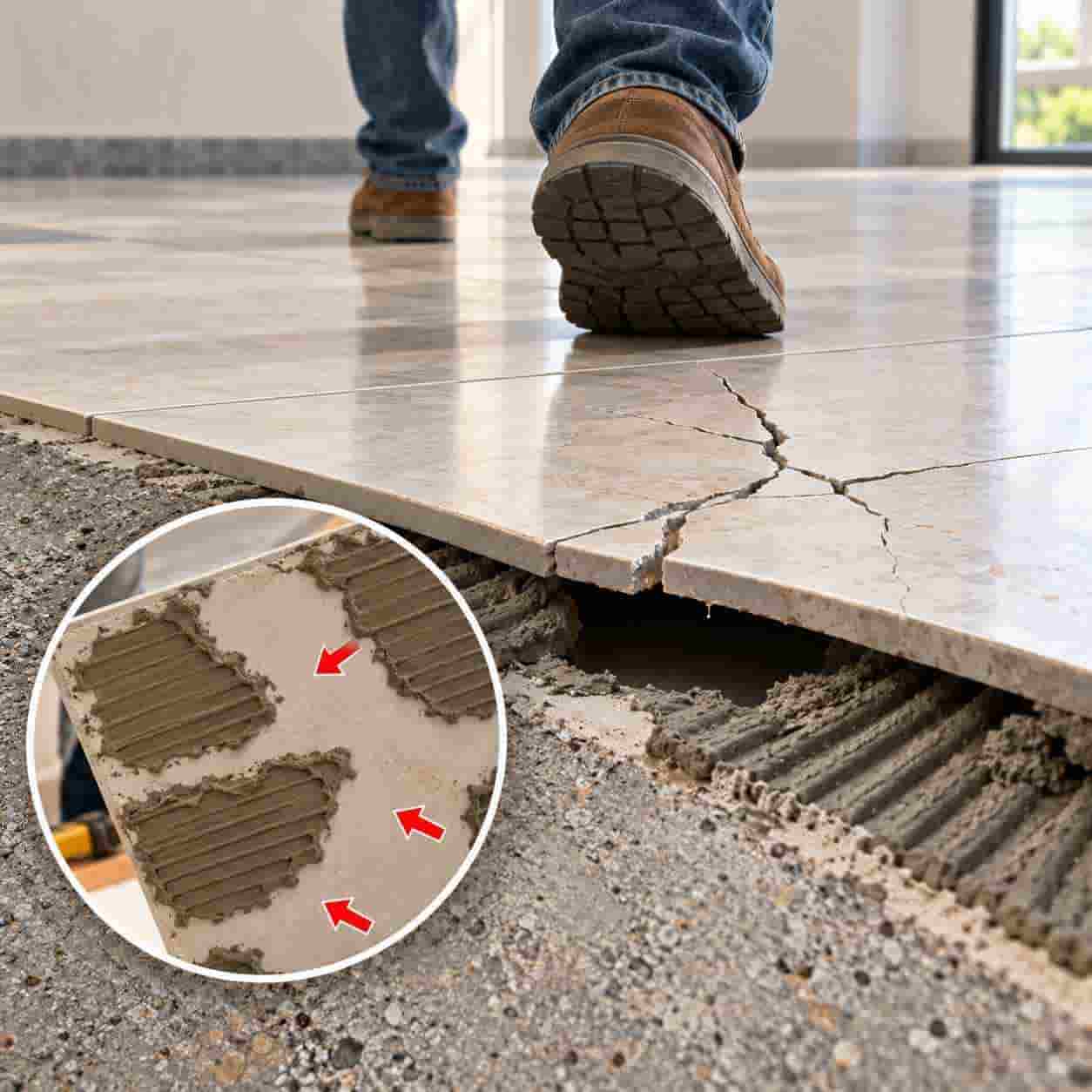
Hollow spots under the tile:
When adhesive doesn’t cover the whole back of the tile, parts of it hang unsupported. Walk over that spot enough times, and the tile gives way. Large tiles are especially unforgiving.
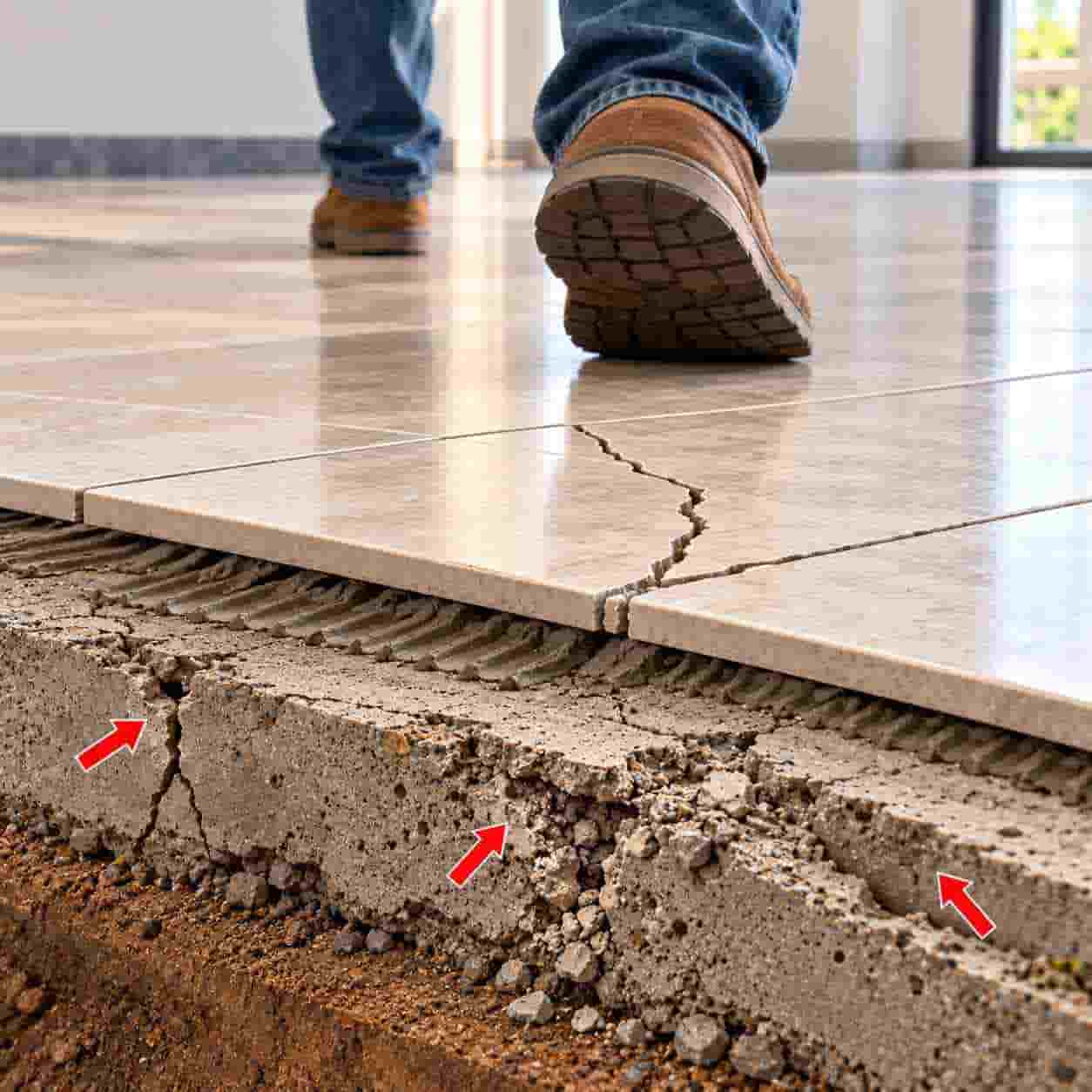
A weak or uncured base:
Tiles are rigid. If the screed or concrete underneath is still curing, crumbly, or uneven, any shift travels straight into the tile.
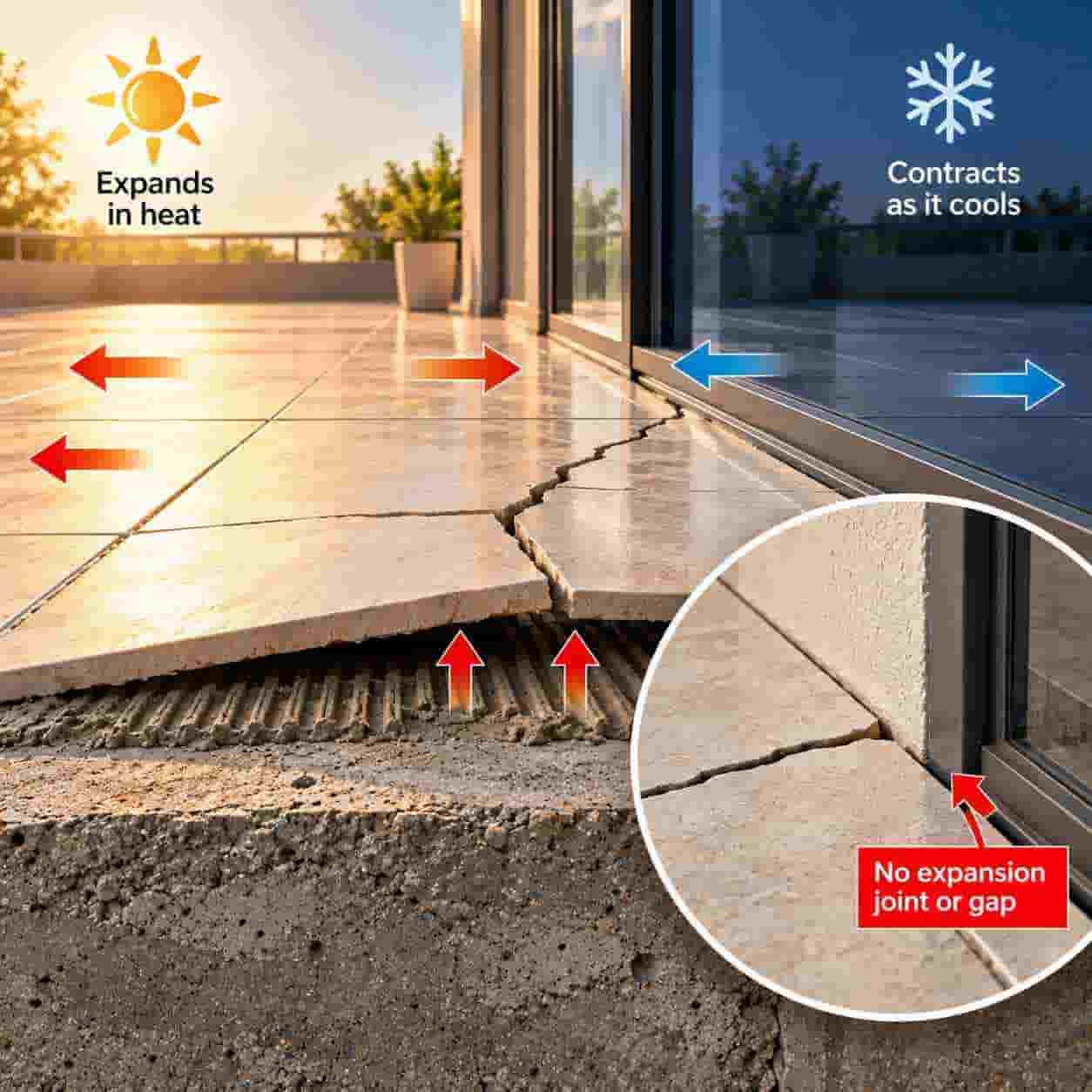
Heat and movement:
Tiles and the surfaces beneath them expand in heat and contract as they cool. Without expansion joints or small gaps at the edges, that pressure has nowhere to go, so a tile cracks or lifts. This matters most on terraces, balconies, and floors near large sunny windows.
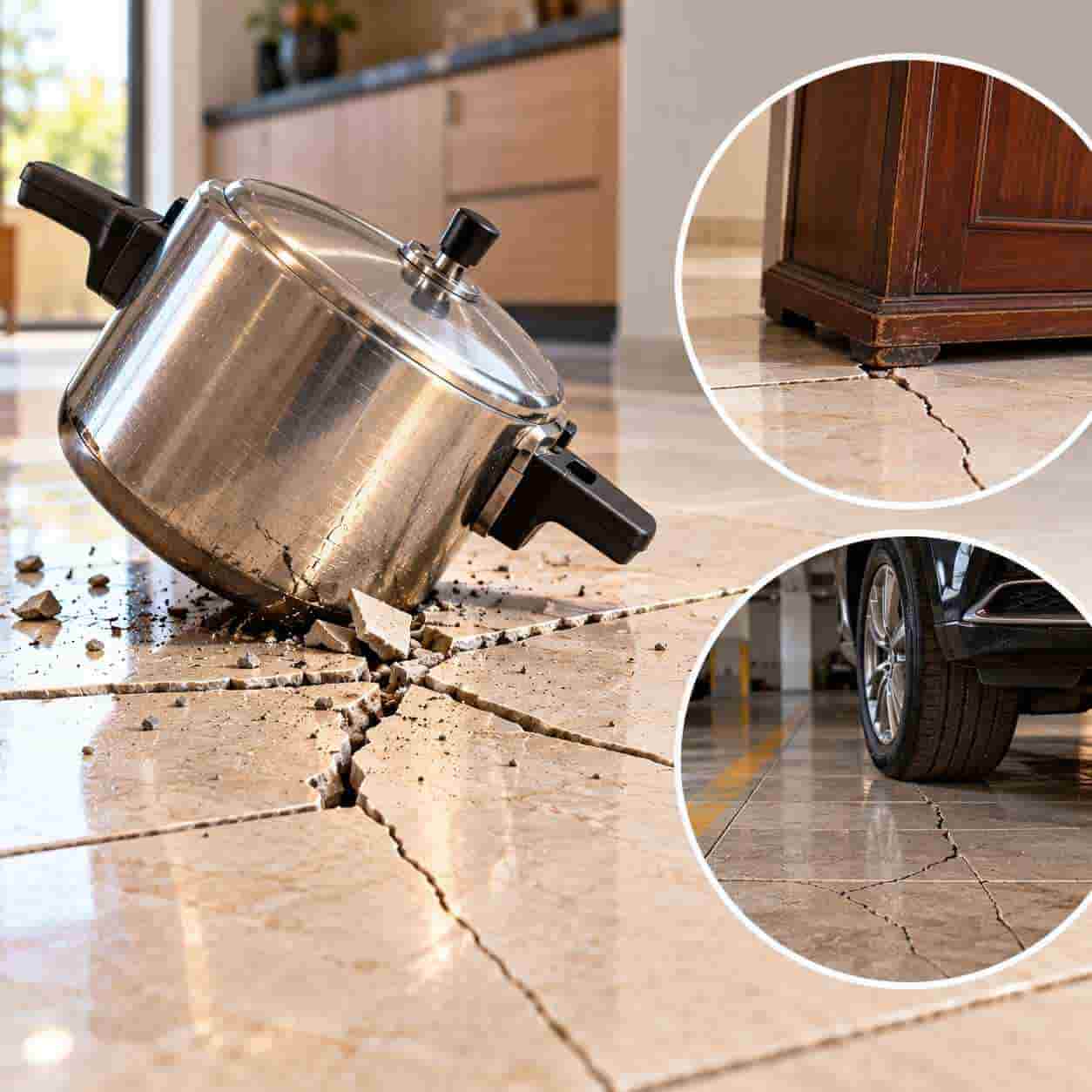
Impact and heavy loads:
Dropping a pressure cooker or dragging a heavy almirah across the floor can crack a tile instantly. Constant heavy loads, such as vehicles on parking floors, do it more slowly.
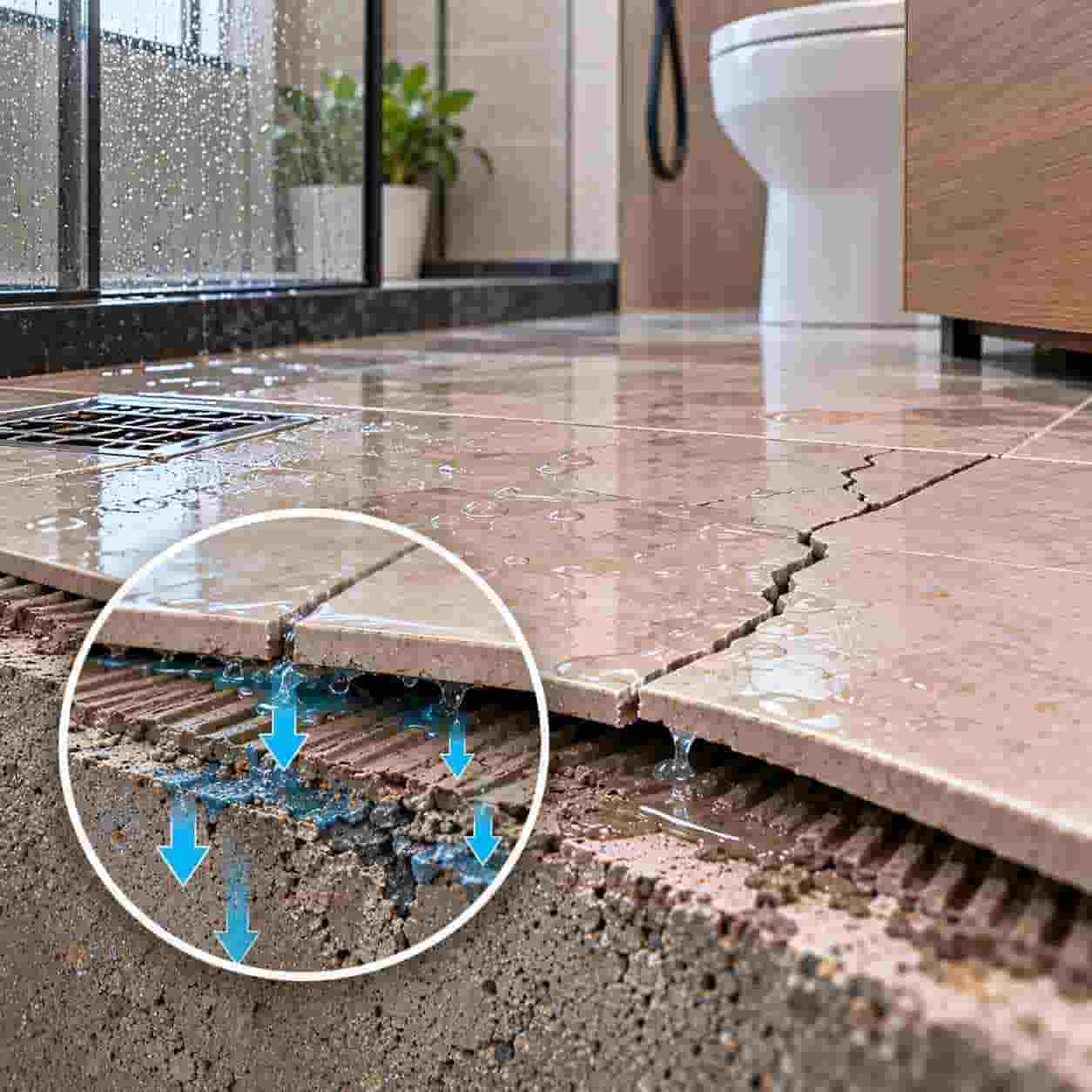
Moisture and leaks:
Water that seeps beneath tiles in bathrooms, kitchens, or terraces weakens the base and the bond over time.
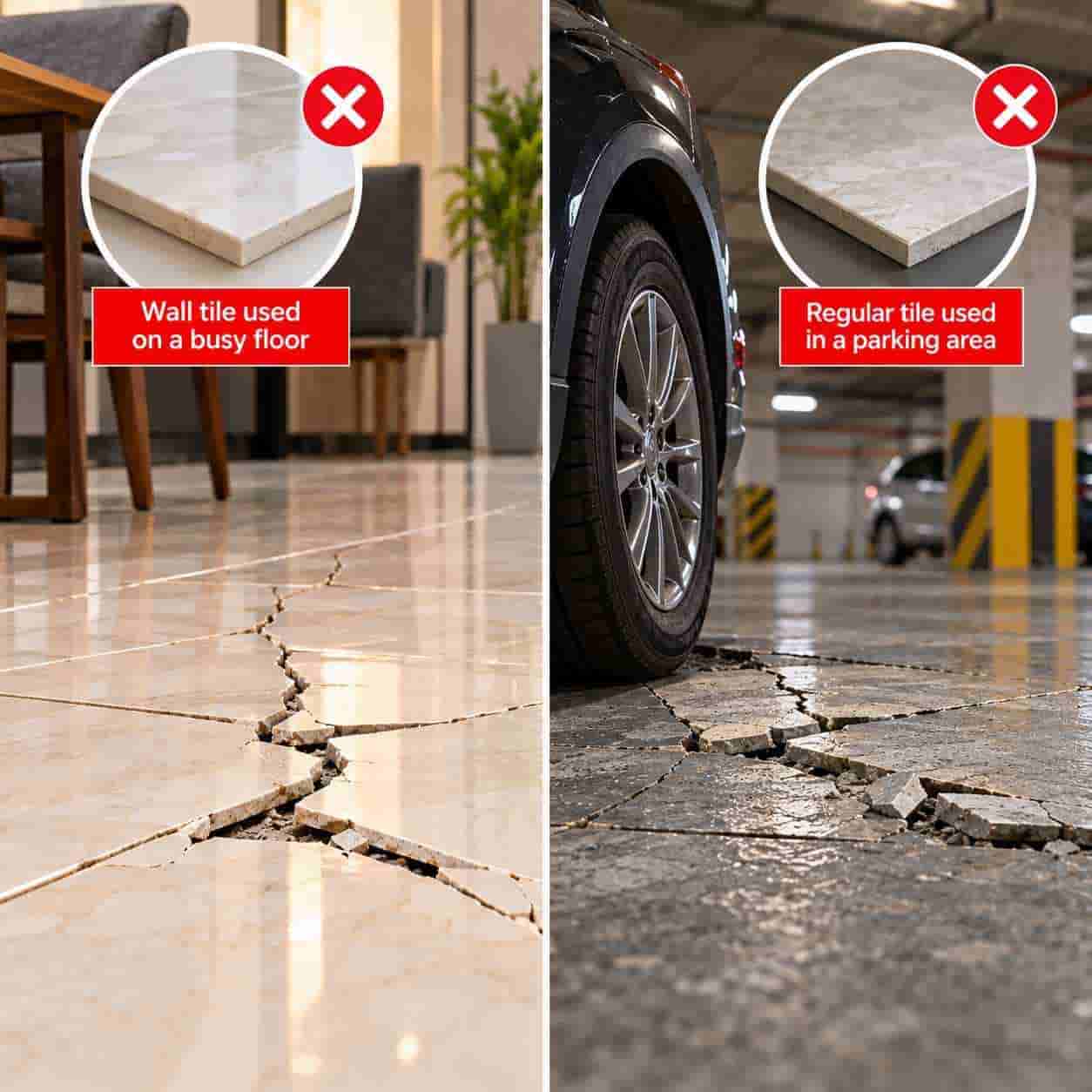
The wrong tile for the space:
A wall tile used on a busy floor, or a regular tile in a parking area, is set up to fail.
Crack Detective: What Your Crack Is Telling You
Not every crack means the same thing. Look at the pattern before you call the mason.
| What you see | Likely cause | What to do |
|---|---|---|
| A single crack in the middle of one tile | Impact, or a hollow spot below | Replace that tile after checking the neighbours |
| A straight crack running across several tiles | Base movement or a missing expansion joint | Call an applicator; replacing one tile won’t fix it |
| Tiles lifting or “tenting” | Heat expansion with no room to move | Get the joints checked at once |
| Cracks near a leak or damp patch | Moisture weakening the base | Fix the leak first, then re-tile |
Try the tap test too. Gently tap tiles with a coin or a spoon handle. A dull, hollow sound suggests the tile isn’t fully bonded to the base. It doesn’t mean the tile will crack, but a large hollow patch is worth getting checked.
How Can You Prevent Tiles From Cracking?
Prevention is cheaper than repair, and most of it happens before the first tile goes down:
Choose the right tile for the job - Use floor tiles for floors and keep wall-only tiles on walls. For parking and heavy-use areas, choose tiles made for the load.
Prepare the base - Make sure the surface is level, clean, and fully cured before tiling. Don’t rush the schedule.
Use the right adhesive, and enough of it - Full coverage under every tile matters most, especially for large formats.
Leave room to move - Keep recommended gaps at edges and add expansion joints in big areas, as your applicator advises.
Waterproof wet areas - Waterproof bathrooms and terraces properly before tiling, so water never reaches the base.
Protect the surface - Use felt pads under furniture and lift heavy items instead of dragging them.
Does the Type of Tile Matter?
It does. Vitrified tiles are dense and low in porosity, so they stand up better to moisture and daily wear. That makes them a sturdy pick for floors. Ordinary ceramic tiles work well on walls, but they aren’t built for hard-working floors, especially in wet areas like bathroom tiles. Check each product’s recommended application before you buy.
Build It Right With Johnson Tiles
Good tiles last longest when the right tile meets the right installation. Explore the Johnson Tiles range of floor tiles and wall tiles, and ask for an applicator for the job.
Not sure which tile suits your space? Visit an Experience Centre or find a dealer using the Dealer Locator, and the team will help you choose with confidence.